
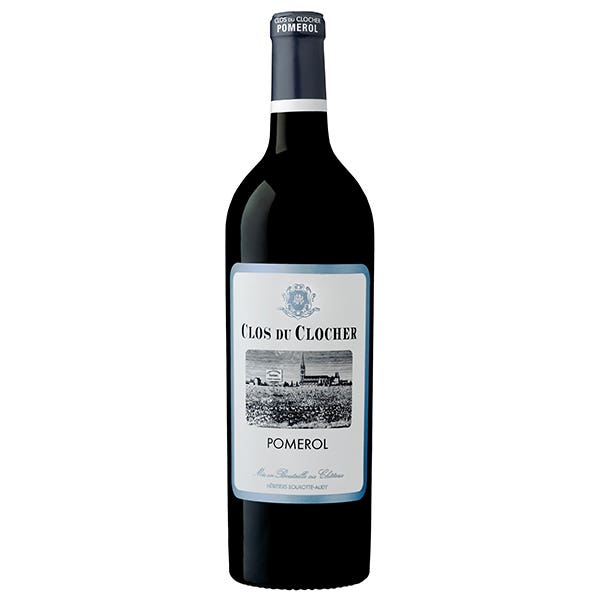

Clos du Clocher 2009
Other Vintages We Offer:
• Domaine: Clos du Clocher
• Appellation: Pomerol
• Origin: Right Bank, Bordeaux, France
Clos du Clocher is a hidden gem in Pomerol. It was first acquired in 1924 by Jean Baptiste Audy, a negociant in nearby Libourne. In the decades that followed, the Audy family added more plots of land to their holdings. The estate is currently managed by Jean Baptiste Audy’s descendant, Jean Baptiste Bourotte.
Pomerol is a tight-knit and compact village on the Right Bank. The namesake appellation is the smallest in Bordeaux. Unlike other appellations, there has been little chance for extension or expansion in Pomerol. That is partly to explain why Pomerol produces some of Bordeaux’s most expensive wine (Pétrus, Le Pin, to name two). It has a minuscule 800 hectares and 135 growers. The village does not have a traditional center, nor any magnificent chateaux. The only landmark is the church on the plateau. Hence many estates in Pomerol are named with references to eglise (the church) and clocher (the bell tower). Paradoxically, Pomerol produces some of Bordeaux's most expensive wine.
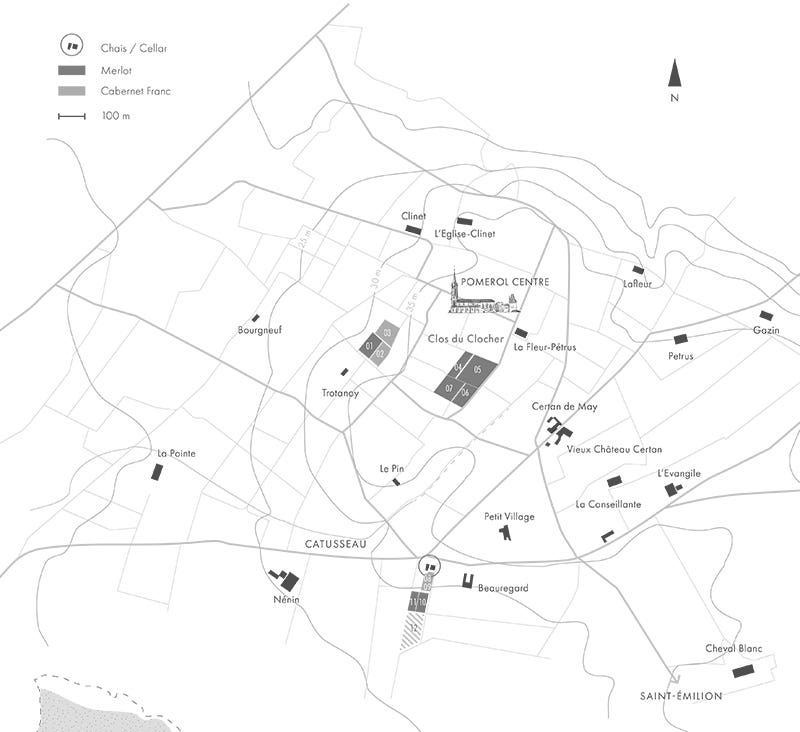
The highest quality plots are on the Pomerol plateau, a largely flat area 35-37 metres high in altitude. The owner of Petrus, Moueix family, defines any land above 30 metres as “high plateau”, which is the most sought-after plots in Pomerol. That is where Clos du Clocher’s largest plot is found. It is located by the church, which is the center of the prime plateau of Pomerol. Neighboring estates include Hosanna, Vieux Chateau Certan. Clos du Clocher’s other sizeable land holding is located next to Château Trotanoy.
Blue clay, the prized soil known for its iron rich quality, is found on Clos du Clocher’s land. It defines its terroir that is home to early ripening Merlot, and Cabernet Franc. The majority of their vines are on average 25 years old, with some oldest vines 60 years old, dating back to 1957. Everything is harvested by hand, and there is a very rigorous selection process.
Many Pomerol wines are made from early ripening merlot and approachable when young, Clos du Clocher almost always has 25% of Cabernet Franc in its wine, which requires more ageing in bottle before it can fully develop. The resulting wine can age for 20 years or longer.
Considering its overall quality and potential, we believe Clos du Clocher is a rare find among Pomerol that is still undervalued. For collectors who want to let the wine age, we recommend these vintages: 2015, 2016, 2018, 2019, 2020.
Tasting Notes
"Still young, majoring on black cherry, damson, black olive, rich and luscious tannins, with a juicy mid palate and mint leaf kiss on the finish. This reflects the more robust Pomerol style of the time, with a muscular architecture, but they are well honed muscles, and the excellence of this site comes through. First year with Cécile Dupuis technincal director, then aged 23. Cold winter, then warm Spring with early budding, and some storms then good weather as of mid May. 55% new oak for ageing." - Jane Anson, (06/24/2024), Ratings: 94
"The finest Clos du Clocher ever made, the 2009 has an inky bluish/purple color and a big, sweet kiss of black raspberry liqueur intermixed with blackberries, subtle smoke and spring flowers along with hints of mocha and coffee. It is full-bodied, rich and pure, with sweet tannin and low acidity. Interestingly enough, the proprietor always brags that he doesn’t want to make great wine because it would fetch a higher price and he would have to pay more taxes, but he certainly has done that in 2009. Drink it over the next 10-15 years." Robert M. Parker, Jr., The Wine Advocate (12/22/2011) Ratings: 92 Drink: 2012-2027
| LWIN | 1008300 |
|---|---|
| Stock Status | In Stock |
| Appellation | Pomerol |
| Vintage | 2009 |
| Shipping Weight | 3.000000 |


-
 Le Pin 2021Special Price $2,932.95 Average US Price $3,135.00
 -
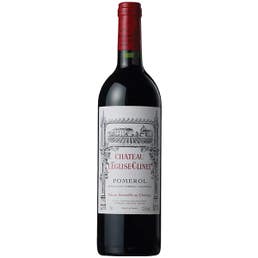 Château L’Eglise Clinet 2010$457.85
 -
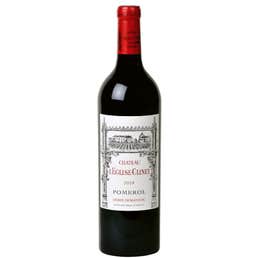 Château L’Eglise Clinet 2019$440.95
 -
Château L’Eglise Clinet 2009$413.85
-
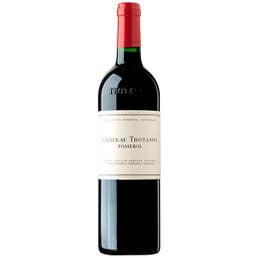 Château Trotanoy 2016$404.95