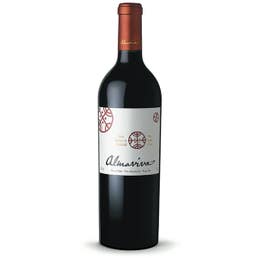
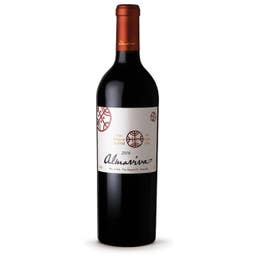
Almaviva 2020
• Domaine: Vina Almaviva
• Appellation: Maipo Valley, Wine of Chile
• Classification: Maipo Valley, Puente Alto, Chile
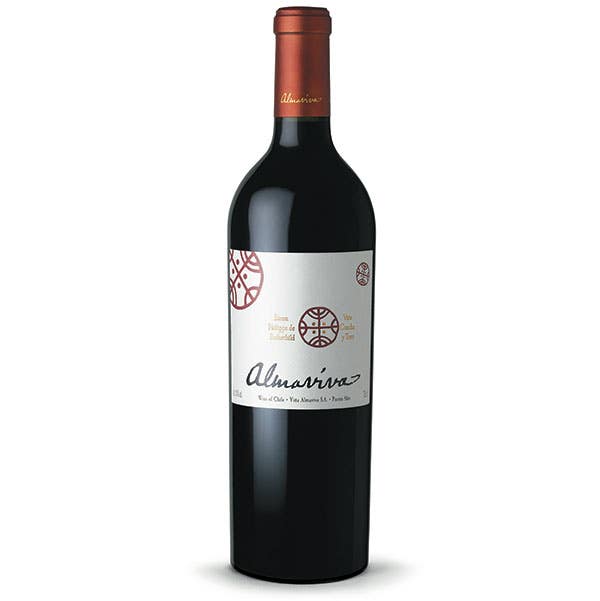
Almaviva is a premium wine produced in Chile's Maipo Valley, one of the country's most renowned wine regions. The wine is a joint venture between the French owner of Château Mouton Rothschild, Baroness Philippine de Rothschild, and Chile's Concha y Toro. The first vintage of Almaviva was produced in 1996. Even though the Baroness passed away on August 23, 2014, her three children continue investing in this project, which has since gained a reputation as one of Chile's finest wines.
Almaviva is a blend of classic Bordeaux grape varieties, including Cabernet Sauvignon, Carmenere, Cabernet Franc, Merlot, and Petit Verdot. The wine is aged in French oak barrels for around 18 months before bottling. The resulting wine is rich, complex, and elegant, with a deep ruby color and aromas of black fruits, spices, and vanilla.
Almaviva is considered a wine for special occasions and is highly sought after by collectors and connoisseurs. The wine has received numerous awards and accolades, including a 100-point rating from the influential wine critic Robert Parker.
HISTORY
In 1997, Baroness Philippine de Rothschild, owner of Mouton Rothschild, and Eduardo Guilisasti Tagle, owner of Viña Concha y Toro, entered into a partnership to create an exceptional Franco-Chilean wine called Almaviva.
The name Almaviva has a Hispanic sonority. It actually belongs to classical French literature: Count Almaviva is the hero of The Marriage of Figaro, the famous play by Beaumarchais (1732-1799), later turned into an opera by the genius of Mozart. The label bearing the name Almaviva is in Beaumarchais’ own handwriting.
Though not claimed by the owners, the referral to a play reminds a curiously minded observer of the successful theatrical career left behind by the Baroness Philippine de Rothschild to assume leadership at her father's business when he died. Her stewardship of the venerable Bordeaux estate plus her success in breaking new grounds led her to be made an Officier of the Légion d'Honneur in 2007. In 2013, she was given a lifetime achievement award by the Institute of Masters of Wine.
Almaviva was intentionally chosen to pay homage to Chile’s ancestral history, with three reproductions of a stylized design, which symbolizes the vision of the earth and the cosmos in the Mapuche civilization. The design appears on the kultrun, a ritual drum used by the Mapuche. Two great traditions thus join hands to offer the whole world a promise of pleasure and excellence.
Tasting Notes
"2020 was exceptionally dry, with 75% less rain than usual in the period between May and September, which resulted in an earlier harvest to produce a 2020 Almaviva with 68% Cabernet Sauvignon, 24% Carmenère (from Peumo), 6% Cabernet Franc and 2% Petit Verdot, so with no Merlot this time. The process was as careful as possible, without using any bombs, doing manual and optical sorting of the grapes, pressing in small vertical presses and aging of 20 months in French oak barrels, 73% of them new and the rest second use. The wine reached good ripeness with 14.9% alcohol. It still shows the effect of the élevage a bit, with abundant notes of sweet spices, a creamy touch and some smoke. I tasted it next to the 2019, and the wines have a very similar aromatic palette with a clear note of baked peppers. What was amazing in 2020 was that they harvested the Carmenere almost five weeks earlier than they normally would, and the result is not a green wine at all. As in all dry years, the wines show a little more tannic, a little in the style of the 2017—but the 2020 has more tension than the 2017, and the 2017 was more powerful and with a bigger tannic structure. The 2019 had more volume than the 2018, and the 2020 is closer to the 2019 than the 2018. 200,000 bottles produced. It was bottled during the second half of February 2022." - Luis Gutiérrez, The Wine Advocate (8/31/2022, Issue 262), Ratings: 96, Drink: 2024-2036
| Stock Status | In Stock |
|---|---|
| Appellation | Maipo Valley |
| Vintage | 2020 |
| Shipping Weight | 3.000000 |
-
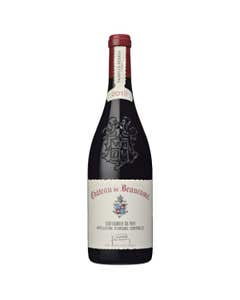 Château de Beaucastel 2018Special Price $99.95 Average US Price $141.00
 -
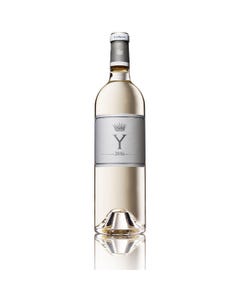 Château d’Yquem Y (Ygrec) 2016Special Price $248.95 Average US Price $260.00
 -
 Château Pavie Macquin 2022Special Price $91.85 Average US Price $93.00
-
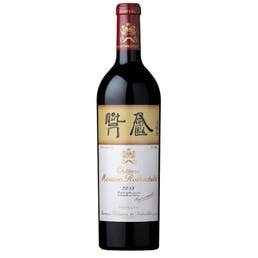 Château Mouton Rothschild 2018Special Price $713.95 Average US Price $954.00
 -
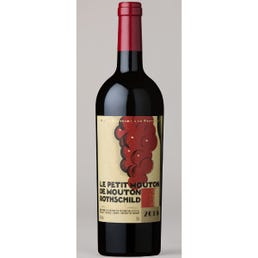
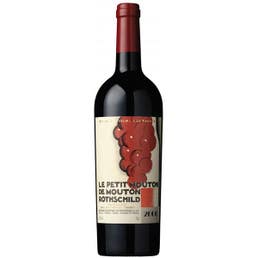 Le Petit Mouton de Mouton Rothschild 2018Special Price $339.95 Average US Price $340.00
 -
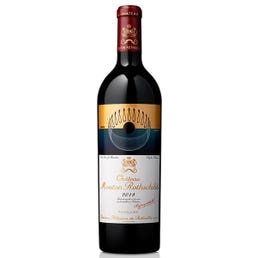 Château Mouton Rothschild 2019Special Price $698.95 Average US Price $834.00